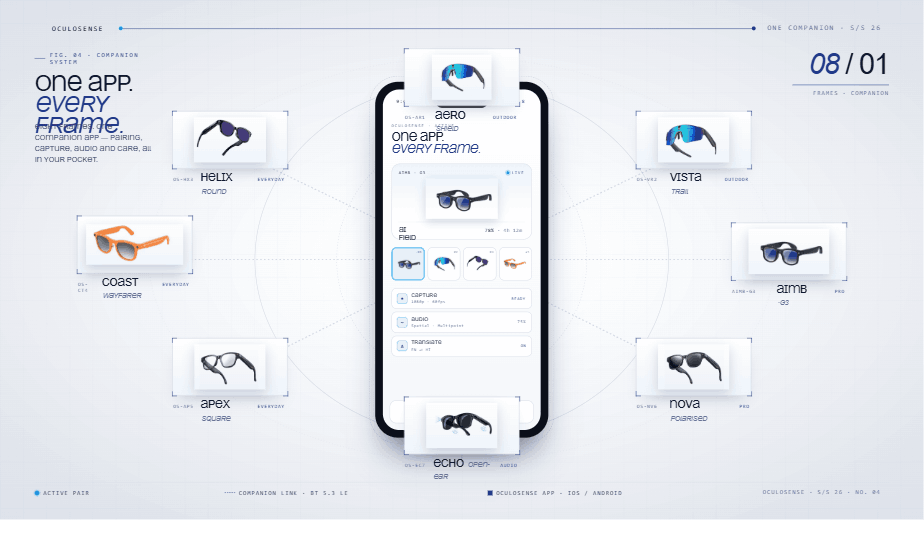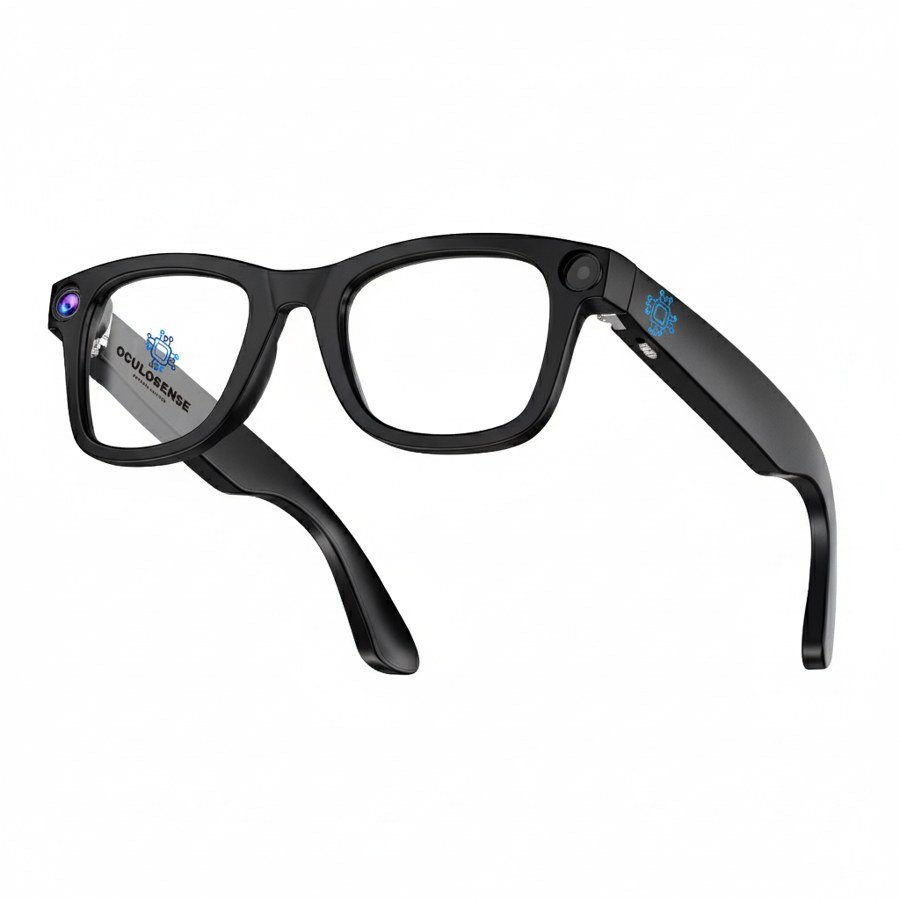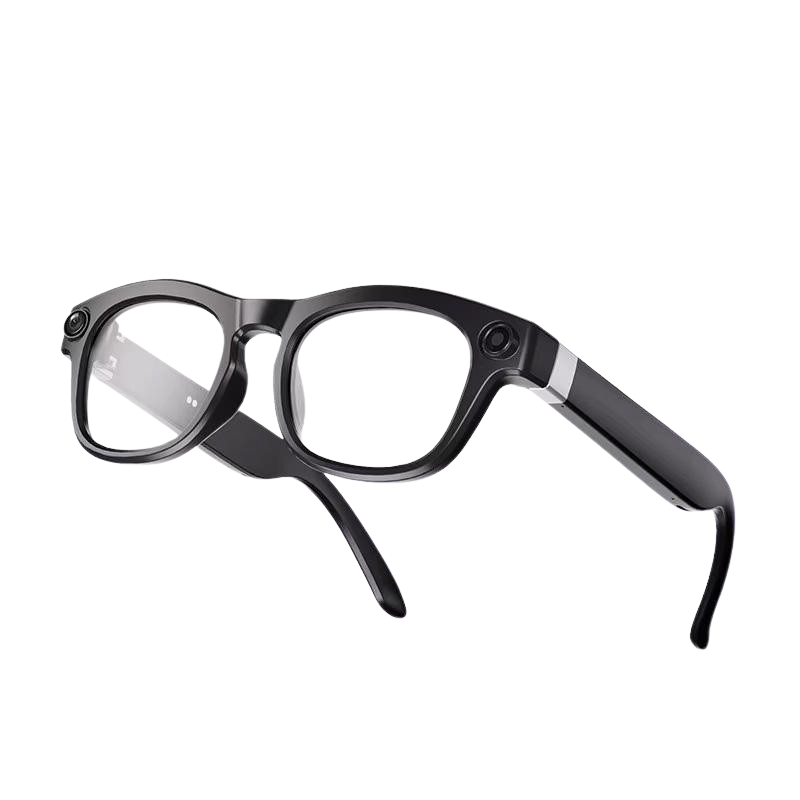
Two AI smart glasses. One for everyone. One for those who need it most. Both built in India. Both come with offline mode — no internet needed.
From bench prototype to the 49-gram glasses people actually wear every day. We started building AI smart glasses for blind users six years before they became a trend — refining the tech with real users every step of the way.
HD camera, on-device AI, open SDK, and a built-in offline mode. India's first open-platform AI smart glasses — with no Meta account, no cloud subscription, and no data harvesting.
Just 49 grams. 100+ Indian & global languages. Reads, navigates, recognises faces — all from a button on the glasses. 1,000+ deployed since 2019, endorsed by Supreme Court justices, state governors, and cabinet ministers.
A traffic officer patrols wearing Oculosense Frames. The AI guides them in real-time — flagging violations, prompting next steps by voice. Every incident is captured on video and a precise challan report is generated automatically.
01A site engineer walks the floor wearing Oculosense Frames. The AI walks them through the checklist by voice, flags safety deviations in real-time, and generates a precise compliance report from the captured video — no pen, no clipboard.
02A vet examines a horse wearing Oculosense Frames. The AI prompts each exam step by voice, records findings hands-free, and generates the full visit note from the session video — ready before they leave the stable.
03An adjuster walks through a fire-damaged property wearing Oculosense Frames. The AI guides the walkthrough, ensures no area is missed, and delivers a complete GPS-tagged damage report to the insurer — the same day.
04Every use case works with offline mode — no internet required on-site.
See how it works for your industry →Every AI vision product hits the same wall: cloud APIs give you accuracy but costs explode at scale. On-device models cut costs but make mistakes. We built a third option — and the math guarantees it's not a tradeoff.
A small 1.5B vision-language model on the user's device proposes 4–8 candidate tokens in milliseconds — using the onboard AI chip, at zero variable cost.
Our full 7B model checks all the candidates in a single parallel forward pass — far cheaper than generating tokens one at a time. Wrong tokens are replaced; right ones are accepted free.
Rejection sampling makes the output provably identical to running the full cloud model alone. Not approximate — exact. The accuracy is a theorem, not an engineering tradeoff.
P(output | our system) = P(output | cloud-only)
— Rejection Sampling Theorem (Chen et al. 2023). Built on peer-reviewed research: EAGLE-3 · MASSV · SpecVLM · ViSpec.